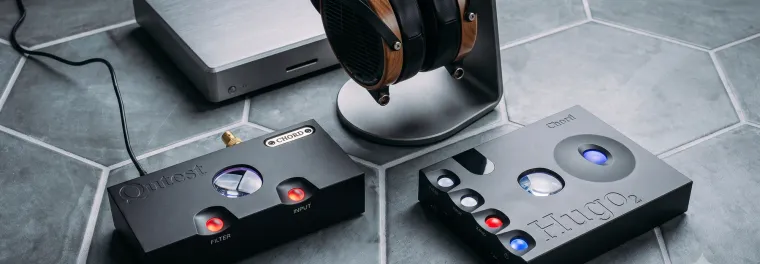
Chord Hugo 2 vs Qutest: Which Chord DAC Should You Buy?
Hugo 2 or Qutest? They share the same 49,152-tap DAC core but solve different problems. Here's how to choose between Chord's portable all-rounder and its desktop specialist.
Chord builds DACs unlike anyone else, and I own two of them. Here is the full lineup from Mojo 2 to DAVE, what makes them special, and how to pick the right one without overspending.
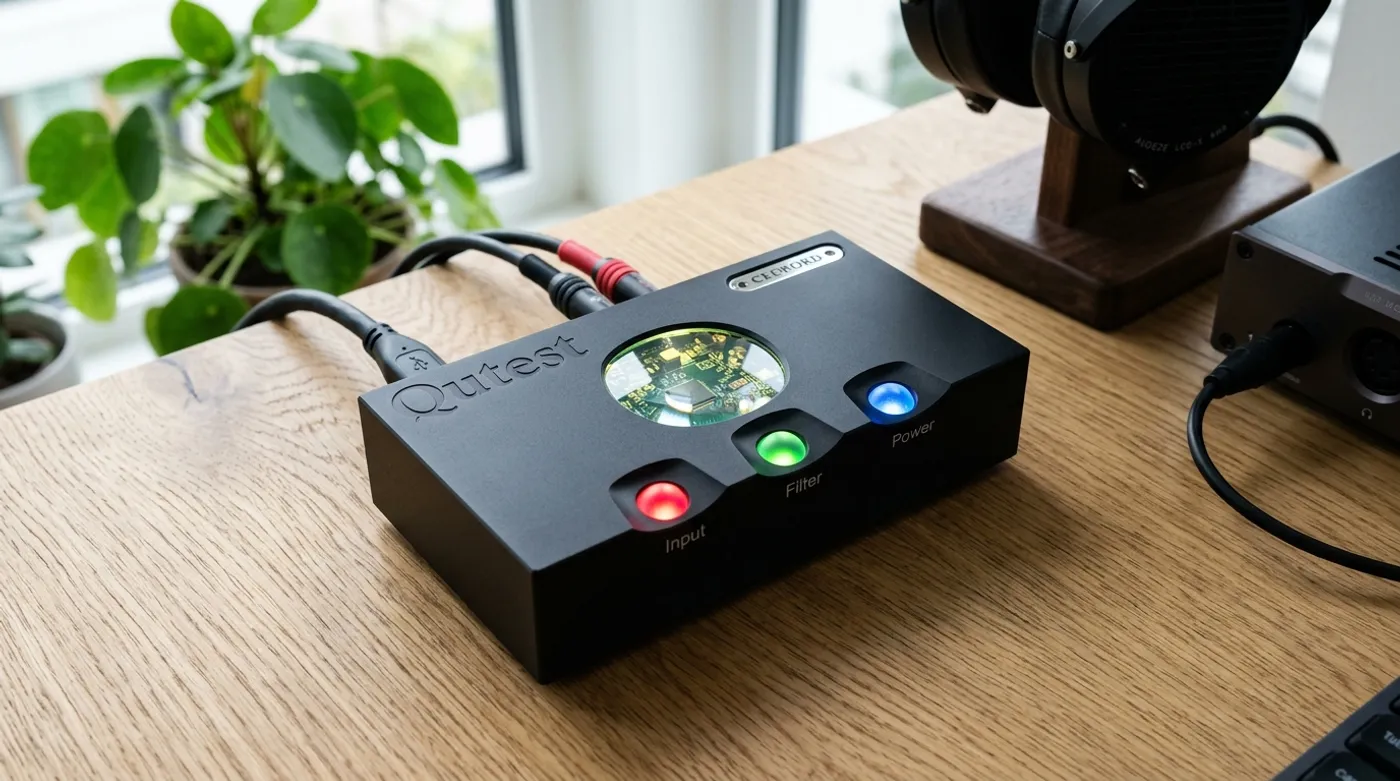
Most DAC brands buy the same handful of converter chips from ESS or AKM and tune around them. Chord Electronics does not. It designs its own conversion on a programmable FPGA chip, using a custom filter developed by its long-time digital designer Rob Watts, which is why a Chord DAC sounds like a Chord DAC no matter the price, and why its older models age far better than chip-based rivals that get leapfrogged every year.
I have lived with two of them, the desktop Qutest and the portable Mojo 2, and spent a lot of time deciding between the rest. This is the whole lineup in 2026, and how to pick the one that actually fits your system instead of the one with the biggest number.
Every Chord DAC shares the same DNA: an FPGA running Watts’ WTA (Watts Transient Aligned) filter with a very high tap count, rather than an off-the-shelf chip. In plain terms, that buys a sound most owners describe the same way, natural, spacious, and detailed without turning clinical. It is a house sound, and once you have heard it, cheaper DACs can feel flat and closed-in by comparison.
The practical upshot: you are choosing between Chords mostly by form factor and features, portable or desktop, with or without a headphone amp, not by chasing a dramatically different sound at each tier.
A portable DAC and headphone amp barely bigger than a deck of cards, and the cheapest way into the Chord sound. It adds Chord’s UHD DSP tone controls (genuinely useful, unlike most EQ), a rechargeable battery, and USB-C charging. It is the one I recommend first for most people, and it doubles as a desktop DAC if you are on a budget. I cover it in full in my Mojo 2 review, and what changed from the original in Mojo vs Mojo 2.
A pure desktop DAC: no headphone amp, no battery, no Bluetooth. It uses the same conversion core as the pricier Hugo 2, and puts every dollar into that instead of extra features. This is my desktop endgame, and after Chord’s recent price cuts it is better value than ever. Buy it if you already have an amp or powered speakers and want a transparent DAC that disappears. Full write-up in my Qutest review.
Think of it as a Qutest with a serious headphone amp and a battery bolted on. It is the pick if you want one premium box that drives headphones on the go and feeds a system at home. If you are torn between this and the Qutest, I break the decision down in Hugo 2 vs Qutest.
A full-size desktop DAC and headphone amp with enough power to drive almost anything, and the performance to match. This is where you land when the Qutest is no longer enough and you want a genuine reference without going all the way to the top.
Chord’s flagship, and one of the most acclaimed DACs ever made. It is a statement piece for systems where price is not the constraint. Most people will never need it, but it is the ceiling the rest of the range points toward.
Two extras worth knowing. Poly turns a Mojo into a network streamer. The Hugo M Scaler upscales the incoming signal to feed compatible Chord DACs like the Qutest and TT2 even more taps, at a price that rivals the DAC itself. Both are for later in the journey, not day one.
I started, like a lot of people, with a modest DAC (a Schiit Modi Multibit) before demoing the Qutest at my local shop and never looking back. The Qutest is my desktop endgame, and the Mojo 2 is the one I hand friends when they ask where to start, because it delivers most of the magic for a fraction of the money. Whichever tier you choose, the through-line is the same: Chord’s FPGA sound is the reason these hold their value and their appeal for years, and the reason I have stopped shopping.
Chord quietly cut prices across the range in recent years (What Hi-Fi), which makes 2026 an unusually good time to buy in.
Hugo 2 or Qutest? They share the same 49,152-tap DAC core but solve different problems. Here's how to choose between Chord's portable all-rounder and its desktop specialist.
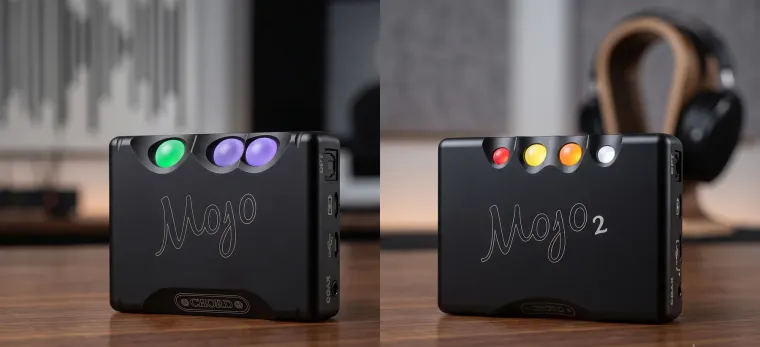
Is the Chord Mojo 2 worth it over the original Mojo? Here's what changed, the DSP EQ, the connectors, the battery, the sound, and whether the upgrade is worth it for you.
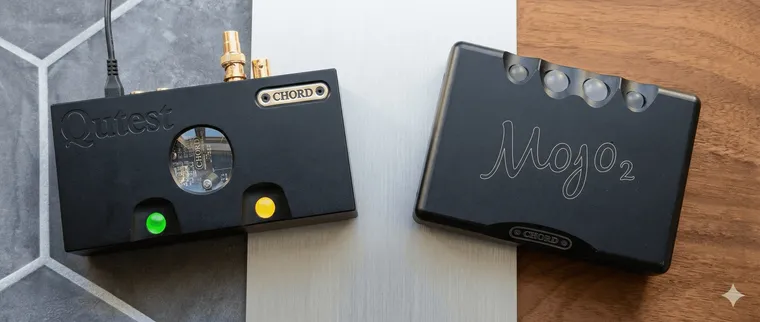
The Qutest places detail. The Mojo 2 pushes it at you. One's desktop royalty. One's portable genius. I own both. Here's which Chord DAC is right for you.