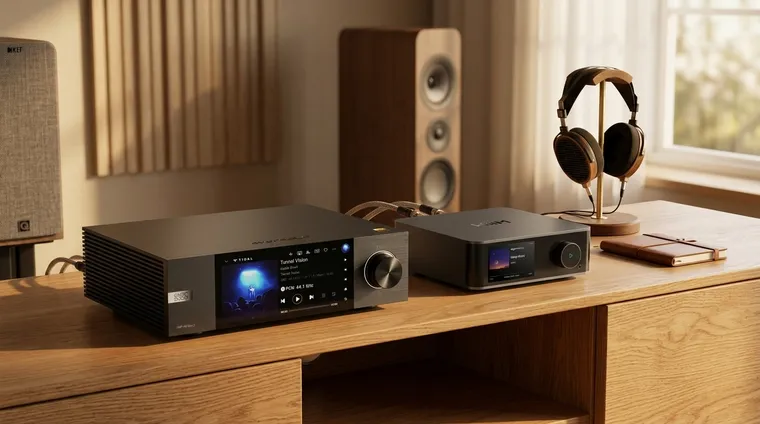
Eversolo DMP-A6 vs WiiM Ultra: Is the Step Up Worth It? (2026)
The Eversolo DMP-A6 costs more than twice the WiiM Ultra. Here is how they compare on sound, features, build, and value, from someone who runs the WiiM daily.
I have owned this turntable since 2018. It is still the one I recommend first, and the one I keep finding small ways to improve.
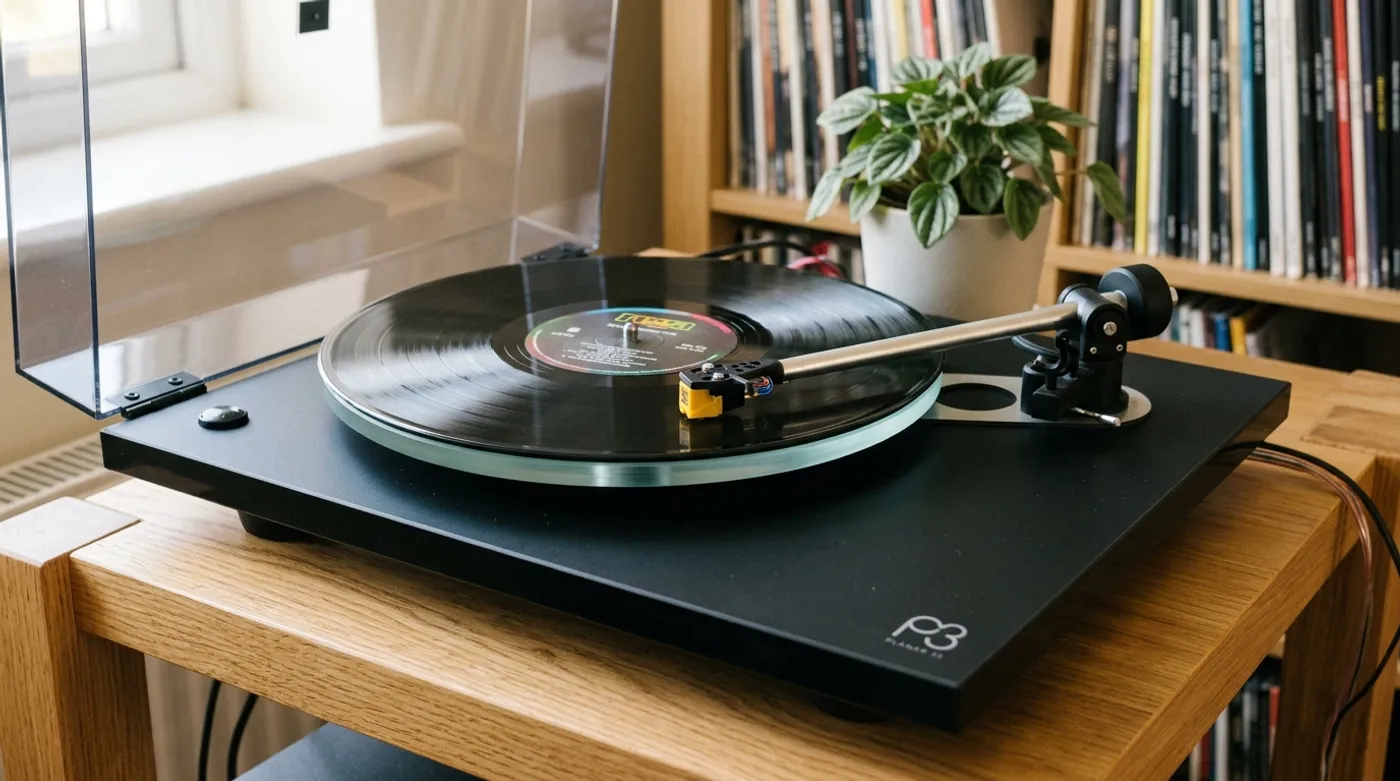
The short answer: The Rega Planar 3 is still the turntable I recommend first in 2026, and I have owned mine since 2018. The RB330 tonearm and rigid, no-nonsense design punch well above the price. It has no built-in phono stage, so plan for a phono preamp like the Schiit Mani. The stock Rega Elys 2 cartridge is good, but a swap to a Nagaoka MP-110 is a worthwhile upgrade if you are willing to do a little setup work.
I bought my Rega Planar 3 in October 2018. In audio terms that makes this less of a review and more of a long marriage. I have moved it between rooms, swapped its cartridge, changed what sits downstream of it more than once, and spent a genuinely silly amount of time solving one small problem that still is not fully solved. Seven years in, it is still the turntable I point people to when they ask where to start, and it is still teaching me things.
That is the highest compliment I can pay a piece of gear: I have had every chance to replace it and never wanted to.
Yes, and it is not close. The Planar 3 has been the default answer to “what is the best turntable around this price” for years, and nothing has come along to unseat it. The reason is philosophy. Rega builds a turntable as a lightweight, rigid structure that does one thing well: it keeps the record spinning at a stable speed and lets the arm read the groove without adding its own noise. There is no chunky plinth, no gimmick, no feature list padded out to justify the price. There is a good motor, a glass platter, and the part that actually matters most, the RB330 tonearm.
The RB330 is the reason to buy a Planar 3 instead of a Planar 1 or 2. It is a genuinely excellent arm at this price, precise and well damped, and it is the component that most turntables in this range cheap out on. Everything Rega does is in service of getting that arm to track cleanly. Once you hear what a good arm does for imaging and timing, the spec sheets on flashier tables stop mattering.
The Planar 3 ships with the Rega Elys 2, a moving magnet cartridge that is honestly good enough that most people never need to touch it. I touched it anyway. I swapped in a Nagaoka MP-110, a moving magnet cartridge that has a bit of a cult following for good reason. Where the Rega house sound leans lively and forward, the Nagaoka adds a little warmth and body, a fuller midrange that suits a lot of the music I actually listen to. It is not a night-and-day transformation. It is the kind of change that makes long listening sessions a little easier and a little richer.
If you are considering the same swap, do it with eyes open. This is where the “modern classic” turntable meets the reality of tinkering.
Here is the part the tidy reviews skip. Rega designs its arm and its plinth around Rega cartridges. Drop a different body in, and the geometry may not line up. In my case the Nagaoka sat too low, which throws off the arm height and, with it, the angle the stylus meets the record. So I retrofitted it: I added spacers to raise the cartridge and get the arm back up off the base to where it should sit.
It is not hard, and it is not scary, but it is real work, and it is worth knowing before you assume a cartridge upgrade is a five-minute plug and play. If you are the kind of person who enjoys dialing a thing in, this is a pleasant afternoon. If you want to unbox and forget, stick with the stock Elys 2, which needs none of this.
Seven years of daily use surfaces the small stuff, and I would not trust a review that pretends everything is perfect. My one ongoing annoyance is the dust cover. The Rega plexiglass lid does not quite fit right anymore, a knock-on effect of the cartridge and setup changes, and I have never found a clean solution. It is a genuinely minor thing, but it is the kind of small unsolved problem that a real owner accumulates and a spec sheet never mentions. I have filed it under “future project,” which in this hobby is a category with a lot of residents.
None of this has ever touched the sound, which is the point. The Planar 3 is mechanically simple enough that living with it is easy. Speed changes are manual, you move the belt by hand rather than flicking a switch, and that is the tradeoff for the price. If that bothers you, Rega sells an outboard power supply that adds electronic speed change, but I have never felt the need.
The Planar 3 has no built-in phono preamp, and this catches first-time buyers out. A turntable’s output is tiny and needs a specific kind of amplification before it hits your system. You solve this one of two ways: a dedicated phono preamp, or an amp with a phono input built in.
I run a Schiit Mani, a small, affordable, and genuinely capable phono stage that has become a bit of a default in this world for good reason. I have also run the Planar 3 into the stock phono stages built into a couple of integrated amps over the years, and it works fine that way too. The Mani is the better result, but the honest takeaway is that the turntable is not fussy about what it feeds. It just needs a phono-level input somewhere. If you already own an amp with a phono stage, start there and upgrade later. I am a longtime Schiit user in general, and their gear has a way of quietly earning its place in a rack, the same way I found with their BUF and Eitr boxes.
My current chain is a little unusual, so let me lay it out plainly: the Planar 3 with the Nagaoka runs into the Schiit Mani, out to my WiiM Ultra acting as a preamp, and then into a Naim Uniti Atom. It is a setup that lets vinyl live alongside streaming in the same system without either feeling like an afterthought, and the WiiM Ultra earns its keep as the hub that ties it together.
The sound is what keeps me here. The Planar 3 has that Rega quality people call pace, rhythm, and timing, a way of making music feel like it is moving forward with intent rather than just playing. Drums land. Basslines walk. There is an energy to it that more expensive, more “refined” tables sometimes iron out. With the Nagaoka softening the top end slightly, I get that drive without any of the fatigue that lively tables can bring on a long evening. It is not the last word in resolution or soundstage width, and it does not pretend to be. It is musical in the specific way that makes you play one more record when you should be going to bed.
Buy it if you want a turntable you can grow with rather than grow out of. It rewards small upgrades, a better cartridge, a nicer phono stage, an outboard power supply, without ever demanding them, and it holds its value if you ever do move on. It is for the person who wants to actually listen to records, not fuss over a machine, but who also does not mind the occasional pleasant afternoon of dialing something in.
It is not for you if you want automatic operation, a built-in phono stage, or a lid you never have to think about. Some of that is the price of Rega’s less-is-more approach, and one of it, in my case, is a dust cover I am still quietly at war with.
Seven years and one cartridge later, the Planar 3 is still the turntable to beat at the price, and still the one I recommend first. 9 / 10.
Related: The WiiM Ultra that anchors this system gets the full writeup in my WiiM Ultra review, and the amp at the end of the chain is covered in my Naim Uniti Atom review.
The Eversolo DMP-A6 costs more than twice the WiiM Ultra. Here is how they compare on sound, features, build, and value, from someone who runs the WiiM daily.
A Chord owner's guide to the whole DAC lineup in 2026, from the portable Mojo 2 to the flagship DAVE. What makes a Chord a Chord, current prices, and which one actually fits your system.
Schiit just launched two small, cheap signal-chain accessories: the Buf tube buffer and the Eitr 2 USB reclocker. Here is what they actually do, the honest debate around each, and whether they are worth the money.